Export Documents Required for Importing Seafood from Indonesia: Complete Checklist
By TaMainco Export Team · Export Documentation Specialist, 10+ Years Experience
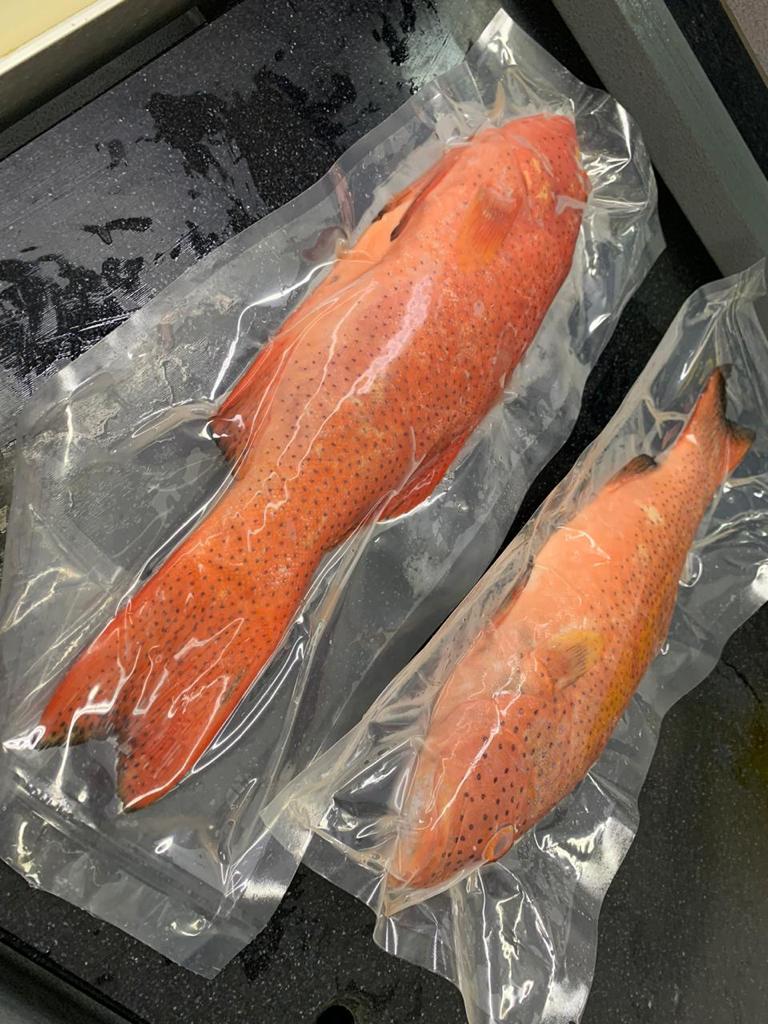
The export documents required for importing seafood from Indonesia are: Health Certificate (SKI) from KKP, Certificate of Origin, HACCP facility certificate, Commercial Invoice, Packing List, and Bill of Lading. Destination-specific additions include the EU Catch Certificate, FDA Prior Notice (USA), GACC registration (China), and Halal MUI certificate for OIC markets. All documents must be originals with official stamps for customs clearance.
Key Takeaways
- Every Indonesian seafood shipment requires a Health Certificate (SKI) issued per-shipment by KKP — it cannot be reused across consignments.
- The Certificate of Origin (COO) unlocks preferential tariff rates under ASEAN FTAs — always confirm the correct form (D, E, or AANZ) with your customs broker.
- EU buyers must receive a validated Catch Certificate for all wild-caught product — aquaculture is exempt but still needs full health documentation.
- HACCP is a facility-level certificate held by the exporter; request a current, non-expired copy before placing any purchase order.
- Phytosanitary certificates do NOT apply to seafood — only to plant products. Do not request one from your Indonesian supplier.
Core Indonesian Seafood Export Documents (Required for All Markets)
Regardless of the destination country, every shipment of seafood exported from Indonesia must be accompanied by the following mandatory documents. Your supplier is responsible for the origin-side certificates; your freight forwarder will consolidate them into the document package presented to destination customs.
1. Health Certificate (Sertifikat Kesehatan Ikan — SKI)
The Health Certificate for seafood Indonesia — officially called Sertifikat Kesehatan Ikan (SKI) — is issued by the Ministry of Marine Affairs and Fisheries (Kementerian Kelautan dan Perikanan / KKP) following a pre-shipment inspection by a KKP-certified fish health inspector. The SKI certifies that the product is fit for human consumption, was processed in a KKP-approved facility, and meets the sanitary and hygienic standards of the importing country. It is issued per consignment — a single certificate cannot cover multiple shipments. Processing time is typically 1–3 working days after the physical inspection at the cold storage or processing plant.
2. Certificate of Origin (Surat Keterangan Asal — SKA)
The Certificate of Origin Indonesia seafood — known as Surat Keterangan Asal (SKA) — is issued by the Indonesian Ministry of Trade (Kemendag) or authorised chambers of commerce. The specific COO form required depends on the bilateral trade agreement with the destination country: Form D for ASEAN member states, Form E for China (ASEAN-China FTA), Form AANZ for Australia and New Zealand, and the general Form CO for non-FTA markets. Importers present the COO to their customs authority to apply for preferential tariff treatment. Without the correct form, you pay the MFN (Most Favoured Nation) tariff rate, which can be 5–15% higher.
3. HACCP Certificate (Facility-Level)
HACCP (Hazard Analysis and Critical Control Points) certification is mandatory under Indonesian law (Government Regulation No. 57/2015) for all seafood processing facilities holding export approval. The HACCP certificate is issued to the processing facility — not the shipment — and must be renewed annually. Buyers should request a copy of the current HACCP certificate, verify the facility approval number against the KKP public registry, and check the expiry date before placing any purchase order. Facilities with BRC Grade A or SQF Level 3 certification are preferable for buyers supplying European or North American retail chains, as these third-party audits exceed the minimum HACCP standard.
4. Commercial Invoice, Packing List & Bill of Lading
These three commercial documents are universal requirements for any seafood shipment from Indonesia. The Commercial Invoice must state the buyer and seller details, product description with HS code, unit price, Incoterms, and total value in USD. The Packing List details the number of cartons, net and gross weight per carton, and total net and gross weight — this must align exactly with the SKI. The Bill of Lading (B/L) — or Air Waybill for air freight — is issued by the shipping line after cargo is loaded and serves as the title document for the goods. For L/C transactions, the original B/L set is a critical negotiating document.
Destination-Specific Export Documents for Indonesian Seafood
Beyond the universal core documents, each major import market imposes additional requirements. Failure to prepare these in advance results in shipment detention, additional inspection fees, or outright rejection at the destination port. Confirm requirements with your customs broker at least 2 weeks before the planned loading date.
| Destination | Additional Document Required | Issuing Authority |
|---|---|---|
| European Union | EU Catch Certificate (wild-caught only) | KKP / DJPT (Indonesia side) |
| United States | FDA Prior Notice (each shipment) | Importer via FDA PNSS portal |
| China | GACC Facility Registration confirmation | GACC (pre-registered by facility) |
| Australia | AQIS Import Permit (seafood) | DAFF / AQIS (importer side) |
| OIC / GCC Markets | Halal MUI Certificate | MUI (Indonesia) |
| Japan | Inspection Certificate (shokuhin eisei) | KKP + Japan MHLW approval |
| South Korea | Korean Health Certificate (KFS format) | KKP (special template) |
EU Catch Certificate: The Most Common Compliance Gap
The EU Catch Certificate is the most frequently misunderstood requirement among first-time buyers. Under EU Regulation 1005/2008, all wild-caught fishery products entering the EU must be accompanied by a catch certificate validated by the flag-state authority of the vessel that caught the fish. For Indonesian-flagged vessels, this means validation by the Directorate General of Capture Fisheries (DJPT) under KKP. The CC must include: vessel name and registration number, fishing area (FAO area), gear type, species, and weight. Processing time is 3–5 working days due to the vessel-level data verification required. Note: farmed (aquaculture) seafood is exempt from the Catch Certificate requirement but remains subject to all standard health documentation.
Halal MUI Certificate: Structure and Scope
For buyers supplying Muslim-majority markets — UAE, Saudi Arabia, Malaysia, Pakistan, Egypt, and others — the Halal certificate issued by the Indonesian Ulema Council (Majelis Ulama Indonesia / MUI) is a commercial and often regulatory requirement. The MUI Halal certificate covers the processing facility and its product scope; it does not need to be reissued per shipment. Buyers should verify that the specific product (species + process form) falls within the scope of the facility's MUI certificate — not all processing lines within a facility may be covered. The certificate must be valid (MUI Halal certificates typically have a 2-year term) and bear an active MUI registration number verifiable on the MUI Halal database.
Document Preparation Timeline: From Production to Vessel Departure
Understanding the realistic document preparation timeline helps buyers plan loading windows correctly and avoids costly vessel rollovers or refrigerated storage demurrage. Below is the typical sequence for a standard FCL reefer export from Indonesia.
Production sign-off
Processing complete, product blast-frozen and transferred to cold storage for loading.
KKP pre-shipment inspection
KKP-certified inspector conducts physical inspection of the product and processing records.
Health Certificate (SKI) issued
SKI issued after inspection approval. Simultaneous application for Certificate of Origin.
Certificate of Origin issued
COO processed by Ministry of Trade or Chamber of Commerce. Same-day available for urgent shipments at additional fee.
EU Catch Certificate issued (if applicable)
DJPT validates vessel catch data and issues the CC. This is the longest single document in the EU shipment sequence.
Container stuffing & customs export declaration
Product loaded into reefer container. Export declaration (PEB) submitted via Indonesia National Single Window (INSW).
Full document package dispatched to buyer
Scan copies sent via email 24–48 hours before vessel departure. Originals via courier after B/L issuance.
Common Documentation Errors That Delay Seafood Imports from Indonesia
Experienced import managers know that documentation errors — not product quality issues — are the leading cause of shipment delays for Indonesian seafood. The following mistakes are consistently reported by customs brokers across key import markets.
Weight discrepancy between SKI and Packing List
Fix: Require your supplier to reconcile final weights after container stuffing — the SKI must reflect the actual shipped weight, not the order quantity.
Expired HACCP or Halal certificate
Fix: Request certificate expiry dates before the PO is issued. Build a certificate validity calendar for repeat suppliers.
Wrong COO form for the destination
Fix: Confirm the applicable FTA form with your customs broker before production starts — switching COO forms post-shipment is costly and sometimes impossible.
Missing EU Catch Certificate for wild-caught product
Fix: Confirm at RFQ stage whether the product is wild-caught or farmed. Wild-caught to EU requires CC — do not assume the supplier will initiate this without instruction.
FDA Prior Notice not filed before vessel departure
Fix: For USA imports, the importer must file Prior Notice via the FDA PNSS portal at least 2 hours before arrival for air freight and 8 hours for sea. Set up FDA PNSS access before the first shipment.
HS code mismatch between Invoice and Import Declaration
Fix: Use our Indonesian Seafood HS Codes guide to align the export HS code with your destination-country import HS code before raising the Commercial Invoice.
How TaMainco Manages Export Documentation
TaMainco is an Indonesian seafood exporter with established relationships with KKP-certified inspectors, the Ministry of Trade's COO issuance offices, and MUI-approved Halal auditors. All of our export products are processed in KKP-approved, HACCP-certified facilities. Our standard document package for every shipment includes:
- Health Certificate (SKI) — original with KKP wet stamp
- Certificate of Origin — correct FTA form for the destination
- HACCP facility certificate — current copy with facility approval number
- Commercial Invoice + Packing List — co-signed by exporter
- Bill of Lading — original set (3 originals) or Telex Release on request
- EU Catch Certificate — for wild-caught product, EU-bound shipments
- Halal MUI Certificate — for OIC-market buyers
- Test reports (heavy metals, microbiology) — available on request for new buyers
Scan copies of all documents are emailed to the buyer 24–48 hours before vessel departure. Original documents are dispatched via DHL or FedEx after the B/L is released. For buyers new to importing from Indonesia, our team provides a pre-shipment document checklist tailored to your destination country. Contact us to discuss your documentation requirements before placing your first order.
Frequently Asked Questions
What certificates are needed to import seafood from Indonesia?
Does Indonesian seafood need a phytosanitary certificate?
What is a Certificate of Origin for Indonesian seafood and why is it required?
Is a Catch Certificate required for all Indonesian seafood exports to the EU?
How long does it take to obtain export documents for Indonesian seafood?
Ready to Import Seafood from Indonesia?
TaMainco prepares a complete, destination-compliant export document package for every shipment. Browse our product range or contact our export team to receive a pro-forma invoice and document checklist for your market.