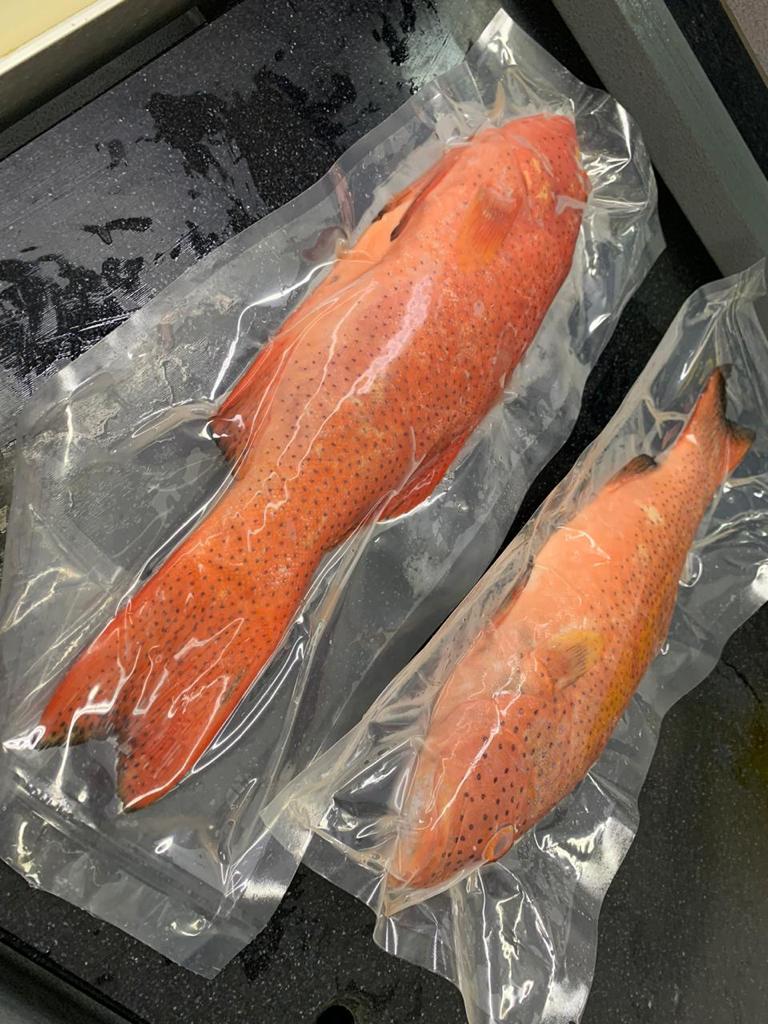
Indonesia seafood exports to China are growing rapidly in 2026, driven by Chinese demand for live grouper, sea cucumber, squid, and frozen shrimp. To enter the China market, Indonesian exporters must hold GACC registration, issue BKIPM Health Certificates, and use ACFTA Form E certificates to access preferential 0% import tariff rates under the ASEAN–China Free Trade Agreement.
Key Takeaways
- China is one of Indonesia's top seafood export destinations, with live grouper, sea cucumber, and squid leading demand in 2026.
- GACC (General Administration of Customs of China) registration is mandatory for all Indonesian seafood exporters selling to China.
- ACFTA Form E Certificate of Origin reduces or eliminates Chinese import tariffs on most Indonesian seafood products.
- Indonesian seafood GACC China compliance also requires BKIPM Health Certificates, cold chain documentation, and HS code accuracy.
- Premium live grouper from Indonesia commands the highest per-kg price in the China import market — up to USD 30–60/kg for select species.
Why China Is a Priority Market for Indonesian Seafood Exporters in 2026
China is the world's largest seafood import market by volume and value, and it is one of the most strategically important destinations for the Indonesia seafood China market trade corridor. In 2024, China's total seafood imports exceeded USD 18 billion — and demand continues to rise, driven by a growing urban middle class, expansion of cold chain logistics infrastructure, and the recovery of China's food service and hospitality sectors following post-pandemic normalization.
For Indonesian exporters, China offers several structural advantages that most other markets do not: geographic proximity (2–5 day transit by sea from Eastern Indonesia), strong existing trade relationships built on decades of live fish trade, and an ASEAN–China FTA framework that provides Indonesian products a meaningful tariff advantage over competitors from outside ASEAN such as Norway, Chile, or Russia.
The Indonesia seafood China market trade flow is anchored by a handful of premium and high-volume species. Live grouper is the crown jewel — China's restaurant banquet culture places enormous value on live reef fish, particularly for business entertaining and wedding banquets. Sea cucumber (dried teripang) commands luxury pricing in Guangdong, Fujian, and Zhejiang markets. Frozen squid, shrimp, and mackerel serve the mass food service and manufacturing sector.
| Species / Category | China Market Segment | 2026 Demand Trend | Key Entry Port |
|---|---|---|---|
| Live Grouper (Red, Dragon Tiger, Flower) | Premium restaurant / banquet | ↑↑ Strong growth | Guangzhou, Shenzhen |
| Sea Cucumber (Dried Teripang) | Luxury food / gifting | ↑ Steady growth | Shanghai, Fuzhou |
| Frozen Squid & Squid Rings | Food manufacturing / food service | ↑ Growing | Tianjin, Qingdao |
| Spanish Mackerel (Tenggiri) | Wet markets / retail | → Stable | Guangzhou, Zhuhai |
| Frozen Vannamei Shrimp | Food service / processing | ↑ Growing | Tianjin, Shanghai |
| Red Grouper Fillet (Frozen) | Food service / hotel chains | ↑ Emerging | Guangzhou, Shanghai |
GACC Registration: The Non-Negotiable Gate for Indonesian Seafood GACC China Compliance
Since January 2022, all overseas food exporters — including Indonesian seafood producers — must be registered with China's GACC (General Administration of Customs of China) before any food product can be imported into China. This requirement applies to processing facilities, cold storage operators, and trading companies. Shipments from unregistered facilities are rejected at Chinese ports of entry without exception.
For Indonesian seafood exporters targeting the China market, GACC registration is the single most important compliance milestone. The registration is applied through Indonesia's competent authority — BKIPM (Badan Karantina Ikan, Pengendalian Mutu, dan Keamanan Hasil Perikanan) — which coordinates with GACC on behalf of Indonesian facilities. The process involves facility inspection, documentation review, and submission of hygiene and HACCP compliance records.
GACC Registration Requirements
- HACCP implementation and documentation
- Cold chain temperature monitoring records
- Facility hygiene and sanitation program
- Water quality testing certificates
- Raw material traceability system
- BKIPM facility registration (Indonesian authority)
- Product safety testing lab reports
- Pest control and environmental monitoring logs
Per-Shipment Documents Required
- BKIPM Health Certificate (HC)
- GACC-format Packing List & Commercial Invoice
- Bill of Lading or Air Waybill
- Certificate of Origin — Form E (ACFTA)
- Cold chain transport declaration
- IQF/freezing log (for frozen products)
- CITES permit (for regulated live species)
- Container temperature recorder data
Buyer Tip: Always Verify GACC Registration Before Placing Orders
Ask your Indonesian exporter to provide their GACC registration certificate and registration number. You can independently verify this at gacc.gov.cn under the overseas registered facility database. Shipments from facilities not listed in the GACC database will be detained and returned at the buyer's cost.
ACFTA Tariff Advantage: How Indonesian Seafood Enters China at 0% Import Duty
The ASEAN–China Free Trade Agreement (ACFTA) is the single most important trade policy advantage for the Indonesia seafood China market corridor. Under ACFTA, the vast majority of Indonesian seafood products qualify for 0% import tariffs when entering China — compared to standard MFN (Most Favored Nation) tariff rates of 5–12% that apply to non-ASEAN competitors such as Norway, Chile, or Russia.
To claim the ACFTA preferential tariff, your Indonesian exporter must issue a Certificate of Origin Form E (CO Form E) for each shipment. This document is issued by Indonesia's Ministry of Trade (Kementerian Perdagangan) or authorized issuing bodies, and it certifies that the seafood product meets ASEAN rules of origin criteria. Chinese customs uses this Form E to apply the reduced ACFTA tariff rate at port of entry.
| Product Category | HS Code Range | MFN Tariff (no FTA) | ACFTA Rate (Form E) |
|---|---|---|---|
| Live fish (grouper, snapper) | 0301.xx | 5–10% | 0% |
| Fresh / chilled fish fillets | 0302.xx–0304.xx | 7–12% | 0% |
| Frozen fish (whole, fillet) | 0303.xx–0304.xx | 7–12% | 0% |
| Frozen squid / cephalopods | 0307.xx | 7–12% | 0% |
| Frozen shrimp / prawn | 0306.xx | 5–10% | 0% |
| Sea cucumber (dried) | 0308.xx | 10–15% | 0–5% |
| Processed seafood products | 1604.xx–1605.xx | 10–20% | 0–5% |
Indicative rates for reference. Actual tariff classification depends on specific HS code and product form. Consult a licensed customs broker for your specific products.
Why This Tariff Advantage Matters for China Buyers
A Chinese importer sourcing 20 metric tons of frozen grouper fillet valued at USD 80,000 would pay roughly USD 5,600–9,600 in import duty under standard MFN rates. With a valid ACFTA Form E from an Indonesian exporter, that duty drops to zero — a direct cost saving passed through to the buyer's landed cost calculation. At scale, the ACFTA tariff advantage makes Indonesian seafood structurally more competitive than equivalent products from non-ASEAN origins, even when Indonesian FOB prices are slightly higher per kilogram.
Grouper China Import Indonesia: The Live Fish Trade Explained
The grouper China import Indonesia trade corridor is one of the oldest and most established bilateral seafood trade flows in Asia. Indonesia is the world's largest supplier of live reef grouper to China, with shipments flowing from Eastern Indonesia — Sulawesi, Maluku, Papua, and Nusa Tenggara — through aquaculture hubs in Batam and Kepulauan Riau, and onward to wholesale live fish markets in Guangzhou, Shenzhen, and Hong Kong.
Live grouper trade is uniquely high-value compared to frozen seafood exports. Premium species such as the dragon tiger grouper (Epinephelus lanceolatus × Epinephelus fuscoguttatus hybrid) and humpback grouper (Cromileptes altivelis) command USD 30–80 per kg in Chinese wholesale markets. The trade operates through specialized live fish transport vessels equipped with oxygenated holding tanks that maintain fish survival rates above 90% during 2–4 day voyages from Indonesian supply bases to Chinese ports.
Red Grouper
Epinephelus akaara
USD 18–30/kg live
Most widely consumed species in Chinese restaurants. Strong demand year-round.
Dragon Tiger Grouper
E. lanceolatus × E. fuscoguttatus hybrid
USD 30–60/kg live
Premium hybrid; high growth rate aquaculture. Top banquet species in Guangdong.
Flower Grouper
Epinephelus fuscoguttatus
USD 20–35/kg live
Popular across China. Strong appetite from food service and wet market channels.
Beyond live fish, frozen grouper fillet is an emerging category with growing China import volumes. As China's food service sector upgrades to portion-controlled, value-added products, frozen grouper fillets from Indonesia offer a cost-efficient alternative to live fish for hotel and institutional catering applications. Indonesian exporters with IQF freezing capabilities and GACC-compliant cold chain can supply this category at competitive FOB pricing.
How to Source Indonesian Seafood for the China Market: A B2B Buyer's Checklist
Entering the Indonesia seafood China market as an importer requires more than price comparison. Documentation compliance, cold chain integrity, and species verification are non-negotiable given China's increasingly rigorous border inspection regime. Use this checklist when evaluating Indonesian seafood suppliers for China-bound procurement.
Verify GACC Facility Registration
Request the supplier's GACC registration number and certificate. Cross-check on gacc.gov.cn. Unregistered facilities cannot legally export to China — this is a binary pass/fail requirement.
Confirm BKIPM Certification Capability
The exporter must be able to obtain BKIPM Health Certificates for each shipment. Ask to see a sample HC from a recent China-bound shipment to verify format compliance with GACC requirements.
Request ACFTA Form E Issuance Capability
Confirm the exporter can issue CO Form E for ACFTA tariff preference. This requires the product to meet ASEAN rules of origin — for wild-caught seafood caught in Indonesian waters, this is generally straightforward.
Audit Cold Chain Documentation
For frozen products, request freezing logs, container pre-cooling records, and temperature recorder data from prior shipments. For live fish, request survival rate data and vessel holding system specifications.
Clarify Species and HS Code
Chinese customs conducts species verification on seafood imports. Ensure the species name on all documents (invoice, packing list, HC) matches the actual product and the declared HS code. Mismatches trigger inspections and can result in shipment hold.
Frequently Asked Questions
How has Indonesia seafood exports to China grown in recent years?
What Chinese certifications does Indonesian seafood need?
What is the import tariff for Indonesian seafood entering China?
Which Indonesian seafood species are in highest demand in China?
How do I find a verified GACC-registered Indonesian seafood exporter?
Ready to Export Indonesian Seafood to China?
TaMainco is a GACC-compliant Indonesian seafood exporter with direct sourcing from Sulawesi, Maluku, and Eastern Indonesia. We handle all export documentation — BKIPM Health Certificates, ACFTA Form E, GACC compliance — so your China-bound shipment clears customs without delays.