How to Import Seafood from Indonesia: Step-by-Step Guide for International Buyers
By TaMainco Export Team · Export Specialist, 10+ Years Experience
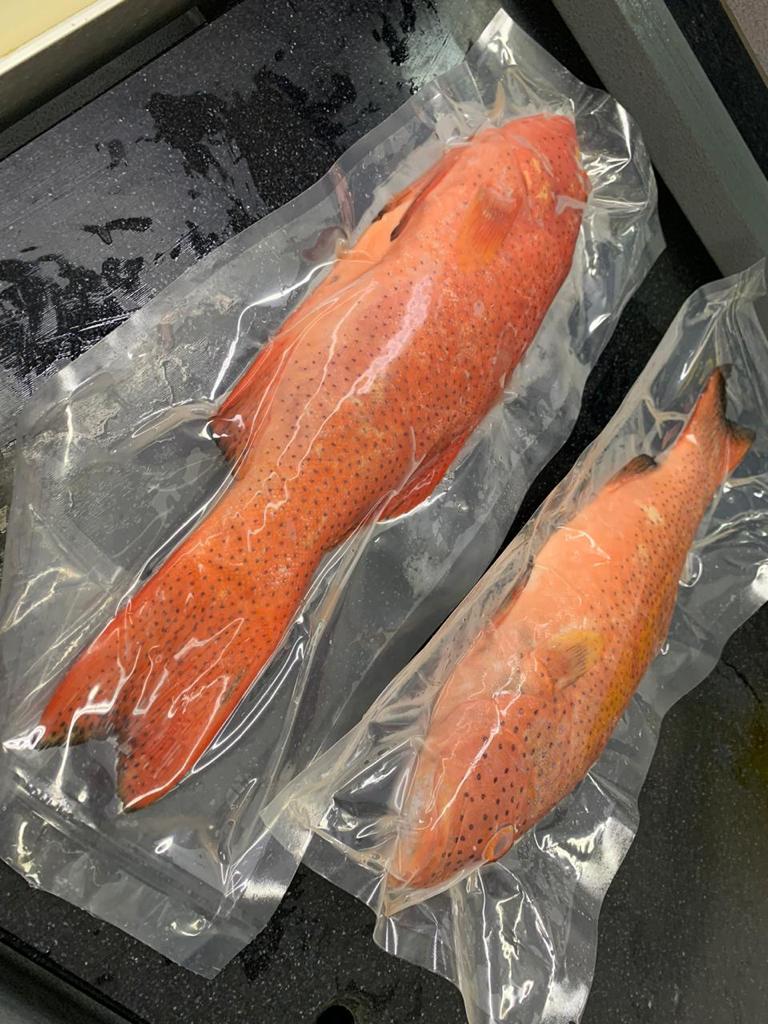
To import seafood from Indonesia, buyers must: select a certified supplier, agree on product specifications and Incoterms, obtain a Proforma Invoice, arrange import permits in the destination country, confirm payment terms (T/T or L/C), and coordinate cold-chain logistics. The full process — from first contact to goods cleared at destination port — typically takes 4–8 weeks depending on the importing country's regulatory requirements.
Key Takeaways
- Indonesia is the world's second-largest fisheries producer — grouper, shrimp, squid, mackerel available year-round.
- Mandatory supplier certifications: HACCP (KKP), BRC Grade A, Halal MUI — always verify against the original issuing body.
- Standard payment terms: 30% T/T deposit + 70% balance against B/L copy, or L/C at sight.
- Import permits vary by destination — check FDA (USA), GACC (China), AQIS (Australia) requirements before ordering.
- Trial orders from 500 kg via LCL or air freight are available to evaluate quality before FCL commitment.
Why Source Seafood from Indonesia?
Indonesia's position as the world's second-largest fisheries producer is not incidental — it is geographic destiny. The archipelago spans 5.8 million km² of ocean, encompasses the Coral Triangle (the highest marine biodiversity zone on Earth), and supports both a massive wild-capture fishery and a rapidly scaling aquaculture sector. For international buyers, this means reliable year-round access to a broad species portfolio under a single Indonesia seafood import guide.
The competitive advantages of sourcing seafood from Indonesia include lower FOB prices than comparable-quality product from Norway, Japan, or Chile; proximity to Asian demand centres (Singapore, Hong Kong, China) that translates to shorter transit times and lower freight cost; and a well-developed export certification infrastructure under the Ministry of Marine Affairs and Fisheries (KKP) that meets EU, USA, and GCC import standards.
Indonesia's top export seafood categories include grouper (wild-caught and farmed), vannamei shrimp, loligo squid, Spanish mackerel, goldband snapper, and leather jacket fish — all available in frozen IQF, fresh-chilled, or live formats. Browse our full product catalog for current specifications and available grades.
How to Import Seafood from Indonesia: 7 Steps
The seafood import from Indonesia process follows a predictable sequence. Understanding each step — and where delays typically occur — gives buyers a realistic procurement timeline and reduces transaction risk.
1Define Your Product Specifications
Before approaching any supplier, document your requirements precisely: species name (scientific name preferred), product form (whole round / dressed / fillet / portion), size grade (e.g., 300–500g, 500g–1kg), frozen form (IQF / block), glazing percentage, packaging format (vacuum PE bag + master carton), and annual volume estimate. Clear specifications enable accurate quotations, reduce negotiation cycles, and prevent misunderstandings at production time.
2Source and Vet a Certified Indonesian Supplier
Identify candidate suppliers via trade directories (GPEI, Alibaba Trade Assurance, ASEAN seafood expos) or direct referral. For each candidate, request: HACCP certificate with facility approval number from KKP, BRC Grade A or SQF certificate if applicable, Halal MUI certificate for Muslim-market distribution, and reference buyer contacts in your target market. Cross-verify certificates against the issuing body's public registry — do not accept unverifiable scans.
3Request Quotation and Sample
Submit a formal RFQ (Request for Quotation) specifying Incoterms (FOB Jakarta or CIF destination port), payment currency (USD standard), and packing requirements. For first-time orders, request a 2–5 kg production sample for sensory and laboratory evaluation before committing to commercial volumes. Reputable suppliers absorb sample cost or charge at-cost; treat refusal to provide samples as a risk signal.
4Verify Destination Country Import Requirements
Import regulations differ significantly by market. USA: FDA Prior Notice submission required for each shipment; facility must be registered in FDA OASIS. China: GACC facility registration mandatory since 2022; non-registered facilities cannot export to China. Australia: AQIS import permit required; strict biosecurity inspection. EU: Catch Certificate required for wild-caught product; facility must appear on EU-approved list. Middle East (UAE, Saudi): Halal certificate + health certificate mandatory. Confirm requirements with your customs broker before finalising the purchase order.
5Negotiate Terms and Sign Sales Contract
Standard commercial terms for sourcing seafood from Indonesia: Incoterms FOB (seller loads on vessel, buyer arranges freight) or CIF (seller arranges freight and insurance to destination port). Payment: 30% T/T advance upon order confirmation + 70% balance against copy B/L; or 100% Irrevocable L/C at sight for first-time buyers. Lead time: 7–14 days for in-stock product, 21–35 days for custom production. The sales contract should specify species, grade, weight tolerances (±3% per carton is standard), glazing allowance, and dispute resolution terms.
6Coordinate Cold-Chain Logistics
Frozen seafood must maintain -18°C from point of processing through to destination cold store. Specify reefer container set-point temperature (-18°C to -20°C) in the freight booking. Book a licensed freight forwarder with seafood-commodity experience — they will handle container booking, phytosanitary documentation coordination with KKP, customs export declaration (PEB), and B/L issuance. For LCL (Less than Container Load) trial orders, use an NVOCC with established Indonesia–destination lane experience.
7Customs Clearance and Final Delivery
Upon vessel arrival, your customs broker files the import declaration with accompanying documents: Commercial Invoice, Packing List, B/L, Health Certificate, Certificate of Origin, and any destination-specific permits (FDA, GACC, AQIS). Physical inspection frequency varies by country — EU and USA typically inspect 5–20% of shipments for certificate verification and temperature check. After clearance, product is transported under maintained cold chain to your cold store facility.
Required Documents for Seafood Import from Indonesia
Documentation is the most common point of failure for first-time importers. Missing or expired certificates result in shipment holds, quarantine fees, and potential product rejection. The following table covers the standard document set for a typical Indonesia seafood import.
| Document | Issued By | Required For |
|---|---|---|
| Health Certificate (SKI) | KKP (per shipment) | All destinations |
| Certificate of Origin (SKA) | Ministry of Trade | All destinations |
| Commercial Invoice & Packing List | Exporter | All destinations |
| Bill of Lading / Air Waybill | Shipping line / Airline | All destinations |
| HACCP Certificate | KKP (processing facility) | EU, USA, China, Australia |
| Halal MUI Certificate | MUI Indonesia | OIC countries (UAE, SA, MY, EG) |
| EU Catch Certificate | KKP (per lot) | European Union |
| FDA Prior Notice | Importer (via FDA portal) | United States |
| GACC Facility Registration | Supplier (pre-registered) | China |
| AQIS Import Permit | Importer (DAFF Australia) | Australia |
Pro tip: Request a complete documents package from your supplier before shipment departs. A missing Health Certificate or expired HACCP certificate discovered at destination port can result in costly detention or destruction of the entire consignment.
Cold Chain Standards: What Indonesian Exporters Must Maintain
Cold chain integrity is the non-negotiable variable in seafood import from Indonesia. Even with perfect documentation, temperature abuse at any stage — processing, cold storage, container loading, or transit — causes irreversible protein denaturation, textural breakdown, and microbial risk. When evaluating suppliers, cold chain capability is as important as price.
Minimum Cold Chain Requirements for Export-Grade Frozen Seafood
- Post-harvest icingFish must be iced or placed in chilled seawater (CSW) within 2 hours of harvest. Core temperature ≤4°C before processing.
- Processing temperatureHACCP-controlled kill and dress line at ≤10°C ambient; product contact surfaces ≤4°C.
- IQF freezingIndividual Quick Freezing in tunnel or plate freezers to -18°C core temperature within 4 hours of processing.
- GlazingWater glaze (5–10% by weight) applied immediately after IQF to protect against dehydration and freezer burn during transit.
- Cold storageFinished product stored at -22°C to -25°C. Temperature logging required by HACCP; logs available to buyers on request.
- Container loadingPre-cooled reefer containers at -18°C set-point. Loading time minimised to <2 hours per FCL. Temperature deviation logs issued.
Ask your supplier for cold storage temperature logs from the past 30 days and a recent lab report (microbiological + chemical residue panel) before committing to a commercial order. Both documents are standard practice among reputable Indonesian exporters and carry no additional cost.
Incoterms, Payment Terms, and Pricing for Indonesian Seafood
Understanding the commercial terms used in Indonesia seafood import guide negotiations prevents costly misunderstandings on cost allocation, risk transfer, and insurance responsibilities.
Common Incoterms for Indonesia Seafood Export
Seller delivers goods loaded on the vessel at the named port (e.g., FOB Jakarta). Buyer assumes risk and cost once goods pass the ship's rail. Buyer arranges freight and insurance.
Most common for experienced importers with established freight forwarder relationships.
Seller arranges and pays ocean freight and insurance to destination port. Risk transfers to buyer when goods are loaded at origin port. Buyer handles import customs.
Convenient for first-time importers — reduces logistics burden but seller controls freight choice.
Seller pays freight to named destination but risk transfers earlier (at handover to first carrier). Often used for multimodal transport including land and sea legs.
Used for door-to-cold-store deliveries where seller has established freight arrangements.
Standard Payment Terms
Looking for product-specific export data? Visit our Products Catalog for current FOB pricing, available size grades, and certifications for grouper, squid, mackerel, and shrimp. For sourcing questions, see our Export FAQ covering MOQ, payment, and logistics.
Frequently Asked Questions
What documents do I need to import seafood from Indonesia?
How long does it take to import seafood from Indonesia?
What is the minimum order quantity (MOQ) for importing seafood from Indonesia?
Which Indonesian seafood products are most in demand internationally?
What certifications should I require from an Indonesian seafood supplier?
Start Importing Seafood from Indonesia Today
TaMainco is a KKP-registered Indonesian seafood exporter serving wholesale buyers across Asia, the Middle East, and Europe. HACCP · BRC Grade A · Halal MUI certified. Submit your specifications and receive a detailed FOB quotation within 24 hours.