How to Verify a Reliable Indonesian Seafood Exporter: Complete Checklist
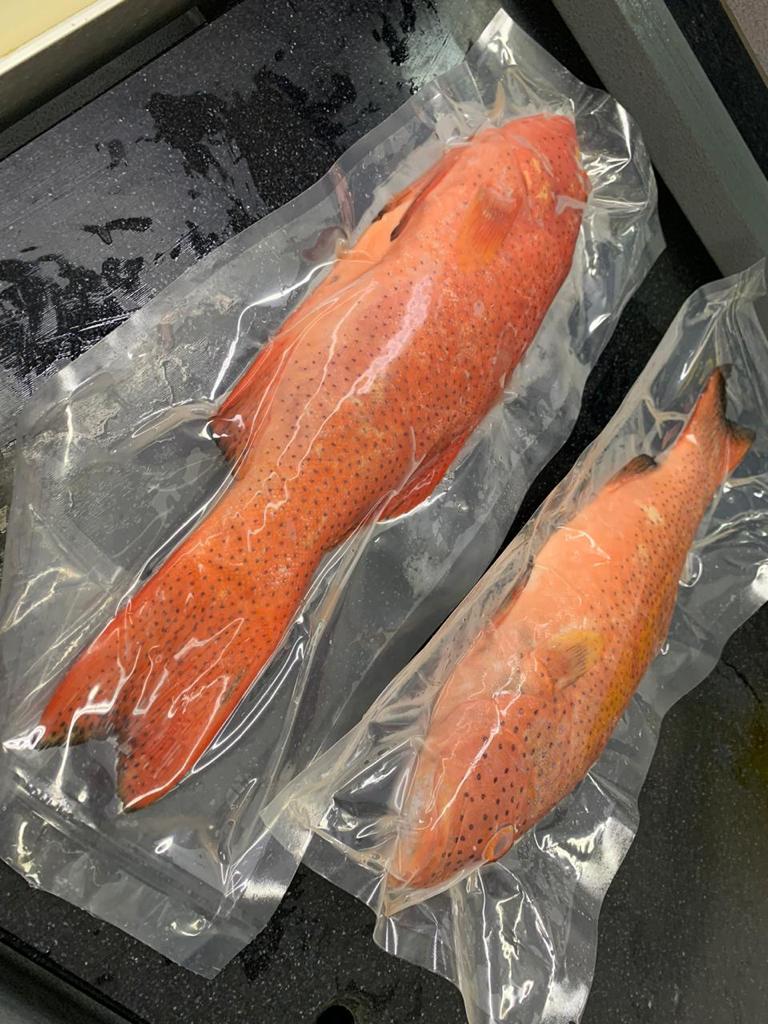
To verify a reliable Indonesian seafood exporter, check five core credentials: a valid KKP processing facility approval, an active HACCP certificate, a Ministry of Trade export license (NIB/SIUP), a per-shipment Health Certificate, and traceable export history. Cross-reference all documents against official government portals before placing any purchase order.
Key Takeaways
- 1Always request KKP facility approval, HACCP certificate, and export license (NIB) before committing to any order.
- 2Verify documents online via the OSS portal, SATUDATA KKP, and BPJPH Halal portal — legitimate exporters welcome this.
- 3Request product samples and conduct or commission an independent facility audit before your first large purchase order.
- 4Watch for red flags: no physical address, below-market pricing, personal bank accounts, and vague certifications.
- 5A reliable Indonesian seafood exporter maintains cold chain at −18°C or below and provides full traceability from catch to container.
Why Supplier Verification Matters in Indonesian Seafood Trade
Indonesia is the world's second-largest fisheries producer, supplying premium species including grouper, vannamei shrimp, loligo squid, and Spanish mackerel to markets across Asia, Europe, and the Middle East. The country's scale is both its strength and its challenge for international buyers: with hundreds of exporters operating across the archipelago, quality and compliance standards vary significantly between operators.
Import refusals are costly. A single rejected container at a destination port can cost USD 5,000–15,000 in demurrage, re-export logistics, and destroyed goods — not counting regulatory penalties in your home market. The US FDA, the EU's RASFF system, and China's GACC all maintain active watch lists for Indonesian seafood facilities with compliance violations.
The good news: Indonesian seafood exports are regulated by KKP (Ministry of Maritime Affairs and Fisheries), which maintains publicly accessible databases. A reliable seafood exporter Indonesia will hold all mandatory approvals and invite third-party verification. This checklist tells you exactly what to check and where to check it.
Step 1 — Verify Legal Business Registration
Every legitimate Indonesian exporter must be registered as a legal entity with an active business license. This is your first filter — it takes less than five minutes and costs nothing.
NIB and Export License (OSS Portal)
Indonesia's Online Single Submission (OSS) system — accessible at oss.go.id — is the government's unified business registration database. Request the exporter's NIB (Nomor Induk Berusaha) number and search it directly on OSS. The result will show the company's legal name, registered address, KBLI business category (aquaculture and fisheries codes: 03211–03212 for marine capture, 10211–10212 for processing), and license status.
For exporters established before 2018, ask for their SIUP (Surat Izin Usaha Perdagangan) and TDP (Tanda Daftar Perusahaan). These older credentials should still be cross-referenced against the OSS migration record.
Taxpayer Identification (NPWP)
Request the company's NPWP (Nomor Pokok Wajib Pajak — tax ID). This appears on all commercial invoices and is verifiable via the DJP Online portal. An exporter without a corporate NPWP cannot legally issue export customs declarations.
Step 2 — Check KKP Processing Facility Approval
A seafood processing and export facility in Indonesia must be approved by KKP (Kementerian Kelautan dan Perikanan). This approval — issued as a Sertifikat Kelayakan Pengolahan (SKP) or registered as a Unit Pengolahan Ikan (UPI) — is the single most important document to verify when you check Indonesian supplier credentials.
How to Verify KKP Facility Approval
- 1Request the facility's UPI/SKP approval number from the exporter.
- 2Visit satudata.kkp.go.id and navigate to the UPI directory.
- 3Search by company name or approval number and verify: legal entity name, facility address, product categories approved (e.g., frozen whole fish, fillet, live), and certificate validity date.
- 4Confirm the approval status is AKTIF (active), not EXPIRED or DIBEKUKAN (suspended).
- 5Match the company name on the KKP database exactly against the name on the exporter's commercial invoice header.
Also confirm that the facility's approved product scope matches what they are quoting you. A facility approved only for dried salted fish cannot legally process and export IQF frozen grouper fillet — this is a frequent compliance gap that can result in shipment detention at destination.
Step 3 — Validate Food Safety Certifications
Beyond the government facility approval, international buyers require market-specific food safety certifications. Here is what each major destination market expects from a reliable seafood exporter in Indonesia.
| Certification | Required For | How to Verify |
|---|---|---|
| HACCP (KKP-audited) | All export markets — mandatory | Request certificate; check facility name, scope, and expiry |
| BRC Grade A | EU/UK retail chains, supermarkets | Verify on brcdirectory.com via company name or site ID |
| SQF Level 3 | North American retail (Walmart, Costco) | Check SQFI database at sqfi.com |
| Halal MUI | Middle East, Malaysia, OIC markets | Verify certificate number at halal.go.id (BPJPH portal) |
| ASC / Friend of the Sea | Sustainability-conscious buyers (EU, AU) | Search on asc-aqua.org or friendofthesea.org |
| FDA Facility Registration | USA imports (mandatory) | Search FDA registration database at fda.gov |
| GACC Registration | China imports (mandatory since 2022) | Check on GACC portal for approved overseas facilities |
Health Certificate and Certificate of Origin
The Health Certificate (Sertifikat Kesehatan Ikan / SKI) is issued per shipment by KKP and is distinct from the facility certificate. Ask your potential supplier for sample Health Certificates from recent shipments — a legitimate exporter will have multiple on file. Verify that the issuing office code, inspector name, and shipment details are consistent with the facility's registered location.
The Certificate of Origin (SKA Form B or generalized Form A) must be issued by the Indonesian Ministry of Trade or an authorized chamber of commerce. This document is essential for preferential tariff rates under ASEAN trade agreements and bilateral FTAs.
Step 4 — Assess Operational Credibility and Export Track Record
Documents alone are necessary but not sufficient. A credible supplier will have demonstrable operational history that you can evaluate before committing capital.
Request Trade References and Export History
Ask for contact details of at least two existing international buyers in comparable markets. A reliable seafood exporter Indonesia will readily provide references and encourage you to speak with them. Ask references about: on-time delivery rate, cold chain integrity on arrival, documentation accuracy, and how disputes were handled.
You can also cross-check shipment history through trade data providers such as ImportGenius, Panjiva, or Volza — these aggregate customs records and can show an exporter's actual shipment volume, destination countries, and buyer names for recent years.
Product Sample Evaluation
Before any purchase order, request a product sample (typically 2–5 kg, shipped air freight at buyer's cost). Evaluate: species identification accuracy against the quote, size grade consistency, glaze percentage versus stated net weight, thaw loss percentage, and absence of off-odor or freezer burn. This step alone eliminates the majority of unreliable suppliers.
Facility Audit — In-Person or Third-Party
Commission an independent audit through SGS Indonesia, Bureau Veritas, Intertek, or a certified local food safety consultant before your first large order. The audit scope should include cold storage temperature logs, HACCP plan review, GMP and personal hygiene practices, species traceability records (catch certificate to export documentation), and equipment calibration records. A reliable supplier will pass this audit and provide the report to you directly.
Step 5 — Identify Red Flags Before You Wire Any Payment
Knowing what to look for matters as much as knowing what to verify. The following warning signs — individually or in combination — indicate a high-risk supplier.
⚠ No physical facility address
Agents posing as exporters cannot provide KKP facility approval. Require a verifiable street address and satellite view match.
⚠ Price significantly below market
Indonesian grouper spot prices are publicly tracked. Prices 20%+ below market suggest species substitution, short weight, or missing cold chain.
⚠ Personal bank account payment
Legitimate exporters receive payment to corporate accounts. Personal account requests are a strong fraud indicator.
⚠ Expired or unverifiable certificates
Certificates with no issuing body stamp, missing approval numbers, or that cannot be found in the issuing database are likely falsified.
⚠ Resistance to sample or audit requests
Any reluctance to provide product samples or allow third-party audits is a clear sign the supplier cannot meet the quality stated.
⚠ Generic email domain
A company conducting international trade using only @gmail.com or @yahoo.com with no corporate website is a significant due diligence concern.
Explore TaMainco's Verified Export Products
TaMainco is a KKP-approved Indonesian seafood exporter with full HACCP certification, halal compliance, and established export history across Asia, the Middle East, and Europe. Browse our product catalog or contact us for a product sample and document package.
Complete Verification Checklist at a Glance
Legal Registration
- ✓NIB verified on OSS portal (oss.go.id)
- ✓NPWP (corporate tax ID) present on invoice
- ✓Company name matches across all documents
KKP Facility Approval
- ✓UPI/SKP approval number verified on SATUDATA KKP
- ✓Facility status: AKTIF (not expired or suspended)
- ✓Approved product scope matches items being quoted
Food Safety Certifications
- ✓HACCP certificate: valid, facility name matches
- ✓Market-specific cert (BRC / SQF / Halal / FDA / GACC) verified on issuing body portal
- ✓Health Certificate sample from recent shipment available
- ✓Certificate of Origin (SKA) process confirmed
Operational Due Diligence
- ✓Trade references provided and contacted
- ✓Shipment history cross-checked (ImportGenius / Panjiva)
- ✓Product sample received and evaluated
- ✓Third-party facility audit completed or scheduled
Payment and Contract
- ✓Payment to corporate bank account (not personal)
- ✓Proforma Invoice with full company letterhead
- ✓Sales contract specifying species, size grade, net weight, glaze %, Incoterms
Frequently Asked Questions
How do I know if an Indonesian seafood exporter is legitimate?+
What certifications should an Indonesian seafood exporter have?+
How can I check an Indonesian supplier's credentials online?+
What are red flags when evaluating an Indonesian seafood exporter?+
Should I visit the seafood facility before placing a large order?+
Ready to Source from a Verified Indonesian Seafood Exporter?
TaMainco provides complete documentation packages — KKP approval, HACCP, Halal MUI, Health Certificate, and Certificate of Origin — with every inquiry. Request a product sample or our full compliance document set with no obligation.