Indonesian Seafood HS Codes: Complete Export & Import Reference 2026
By TaMainco Export Team · Trade Documentation Specialist
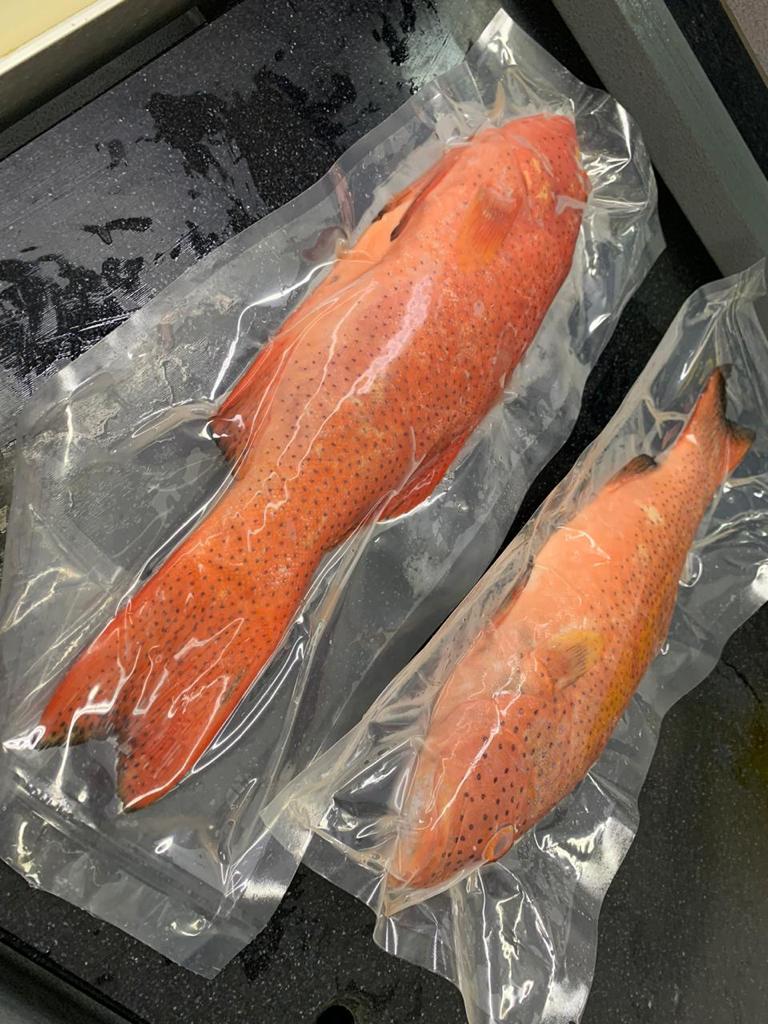
Indonesian seafood HS codes are 6–10 digit Harmonized System tariff codes used to classify fish, crustaceans, and molluscs for customs declaration in both export and import. The primary chapters are HS 03 (live, fresh, frozen, dried seafood) and HS 16 (prepared/preserved seafood). Frozen whole grouper falls under HS 0303.89; frozen fillets under HS 0304.89; squid under HS 0307.43. This reference covers key tariff codes for Indonesia's top marine export commodities in 2026.
Key Takeaways
- Indonesian seafood is primarily classified under HS Chapter 03 (live, fresh, frozen, dried) and HS Chapter 16 (prepared/preserved).
- Frozen whole grouper, snapper, and mackerel: HS 0303.89 — most common sea-freight export code.
- Frozen fish fillets (grouper fillet, snapper fillet): HS 0304.89.
- Loligo squid frozen: HS 0307.43 — Indonesia is one of the world's top squid exporters.
- ASEAN-China FTA (Form E) can reduce duty to 0% for eligible Indonesian exporters shipping to China.
- Agricultural exports (spices, vanilla, coconut oil) use HS Chapters 07, 09, and 15.
What Are HS Codes and Why They Matter for Seafood Trade
The Harmonized System (HS) is an internationally standardized nomenclature developed by the World Customs Organization (WCO) and used by 200+ countries to classify traded goods. The first 6 digits of any HS code are universal — the same in Indonesia, China, the EU, and the USA. Digits 7–10 are country-specific extensions that reflect each nation's tariff schedule.
For importers sourcing Indonesian seafood, the HS code on the commercial invoice and customs entry determines: (1) the applicable import duty rate, (2) whether preferential trade agreement rates (e.g., ASEAN-China FTA, EU GSP) apply, (3) which permits and sanitary certificates are required at the port of entry, and (4) quotas or seasonal restrictions if any are in force.
Indonesian Customs Tariff: BTKI System
Indonesia uses the BTKI (Buku Tarif Kepabeanan Indonesia) — its national tariff schedule based on ASEAN Harmonized Tariff Nomenclature (AHTN). BTKI codes are 8 digits for most goods, extended to 10 digits for certain sensitive categories. The Indonesian Directorate General of Customs and Excise (DJBC) maintains the official BTKI database, which is updated following each ASEAN HS revision cycle (most recent: AHTN 2022).
For seafood export from Indonesia, the relevant export customs document — Pemberitahuan Ekspor Barang (PEB) — must include the correct BTKI code. Errors in HS classification on the PEB can result in export delay, document rejection, or import clearance refusal at the destination port. Working with an experienced Indonesian seafood exporter like TaMainco ensures correct classification from day one. View our product catalog with pre-verified HS codes for each commodity.
Complete HS Code Reference: Indonesian Seafood & Agricultural Exports 2026
The following tariff codes reflect the seafood HS code Indonesia classification under AHTN 2022 / BTKI 2022. These are the standard codes used on Indonesian export documents. Verify against your destination country's tariff schedule for import classification, as digit-level mapping can differ beyond the first 6 digits.
HS 03 — Fish & Seafood
| HS Code | Description |
|---|---|
| 0301.99 | Live fish — grouper, snapper, other marine species (excluding ornamental fish) |
| 0302.89 | Fresh or chilled marine fish (other than fillets) |
| 0303.89 | Frozen whole fish, other marine species (not listed 0303.11–0303.79) |
| 0304.89 | Frozen fish fillets — other marine species |
| 0307.43 | Cuttlefish and squid — frozen |
| 0307.49 | Cuttlefish and squid — fresh, chilled, dried, salted |
| 0305.63 | Dried salted fish (not smoked) |
| 0306.17 | Shrimps and prawns, frozen |
| 0306.16 | Cold-water shrimps, frozen (Pandalus spp.) |
| 0308.19 | Holothurians (sea cucumber), frozen or dried |
HS 09 & 07 — Spices & Agricultural (Results Tani)
| HS Code | Description |
|---|---|
| 0904.21 | Dried peppers (Capsicum spp.), not crushed or ground |
| 0904.22 | Crushed or ground dried peppers |
| 0905.10 | Vanilla beans, not processed |
| 0906.11 | Cinnamon and cinnamon-tree flowers, not crushed/ground |
| 0908.31 | Nutmeg, not crushed or ground |
| 0910.11 | Ginger, not crushed or ground |
| 1513.21 | Coconut (copra) oil, crude |
Import Duty Rates on Indonesian Seafood by Key Market (2026)
Understanding the tariff code for Indonesian fish is only half the equation — importers also need to know the applicable duty rate in their country and whether any preferential trade agreement reduces that rate. The following table summarizes current duty rates for the most active import markets for Indonesian marine products.
| Market | MFN Duty (HS 0303) | Preferential Rate |
|---|---|---|
| China | 5–10% | 0% |
| European Union | 12–15% | 0–5% |
| Japan | 3.5–7% | 0% |
| United Arab Emirates | 5% | 4% |
| South Korea | 10–20% | 0–5% |
| United States | 0–4% | 0% |
| Australia | 0% | 0% |
| Hong Kong | 0% | 0% |
| Singapore | 0% | 0% |
How to Claim Preferential Tariff Rates
To claim preferential duty rates under applicable FTAs, Indonesian exporters must provide a valid Certificate of Origin (COO):
- Form EASEAN-China FTA — issued by Indonesian Trade Ministry (Kemendag) for shipments to mainland China
- Form AJ / AIJECASEAN-Japan CEPA — for shipments to Japan
- Form AKASEAN-Korea FTA — for shipments to South Korea
- Form AIASEAN-India FTA — for shipments to India
- Form A (GSP)EU Generalised Scheme of Preferences — for shipments to EU member states
TaMainco provides the appropriate Certificate of Origin with every export shipment as part of the standard documentation package. Contact our team to confirm which COO form applies to your destination country.
HS Classification for Indonesia's Top Marine Export Species
The Indonesian seafood customs code for a given product depends not only on species but also on the state of processing — live, fresh/chilled, frozen whole, frozen fillet, dried, or prepared. The following breakdown covers classification nuances for Indonesia's highest-volume marine export species.
Grouper (Kerapu) — Red, Flower, Dragon Tiger
| 0301.99 | Live grouper |
| 0302.89 | Fresh / chilled whole grouper |
| 0303.8990 | Frozen whole grouper (gutted, headed, dressed) |
| 0304.8990 | Frozen grouper fillets (skin-on or skinless) |
Grouper is Indonesia's highest-value finfish export. Live trade to Hong Kong uses 0301.99; most wholesale frozen export uses 0303.8990.
Spanish Mackerel (Tenggiri)
| 0303.54 | Frozen Atlantic mackerel (Scomber scombrus) |
| 0303.8990 | Frozen Spanish mackerel — other marine fish (Scomberomorus spp.) |
| 0304.8990 | Frozen Spanish mackerel fillet / steak |
Spanish mackerel (Scomberomorus commerson) does not have a dedicated 6-digit HS subheading and is classified under the "other" marine fish residual category.
Goldband Snapper (Kakap / Bambangan)
| 0302.89 | Fresh / chilled whole snapper |
| 0303.8990 | Frozen whole snapper (gutted or round) |
| 0304.8990 | Frozen snapper fillet |
Snapper (Pristipomoides multidens, Lutjanus spp.) follows the same HS pathway as grouper. High demand for frozen fillet from European and Middle Eastern food-service buyers.
Loligo Squid (Cumi-cumi)
| 0307.43 | Frozen squid (Loligo spp.) — whole or cleaned |
| 0307.4310 | Whole frozen squid, uncleaned (with head, tentacles, ink sac) |
| 0307.4390 | Cleaned squid tube (mantle only), tentacles separate |
| 0307.49 | Dried squid / semi-dried squid |
Indonesia ranks among the top 5 global squid exporters. Loligo squid is exported primarily in IQF whole-cleaned tube format for EU, North America, and Japanese markets.
Vannamei Shrimp (Udang Vaname)
| 0306.17 | Frozen shrimps and prawns — Penaeidae family |
| 0306.1710 | Frozen vannamei shrimp, shell-on (HLSO, HOSO) |
| 0306.1790 | Frozen vannamei shrimp, peeled (PD, PUD, PDTO, EZ-peel) |
| 1605.21 | Shrimp/prawn — prepared or preserved, not in airtight containers |
Vannamei shrimp is Indonesia's largest seafood export category by volume and value. Multiple value-added forms (peeled, deveined, breaded) have different HS classifications.
Need HS code confirmation for a specific product spec? Send your product inquiry and our export team will provide the correct classification with supporting documentation. You can also browse our product categories to see available species and processing formats.
Export Documentation: What Accompanies Each Shipment
Understanding the Indonesian seafood customs code is one step — equally important is the full documentation set that must accompany each export shipment to ensure smooth import clearance at destination. The following documents are standard for all TaMainco seafood exports.
Pemberitahuan Ekspor Barang (PEB)
Indonesian export customs declaration — filed with DJBC (Directorate General of Customs). Contains HS code, FOB value, exporter/importer details, and vessel information.
Health Certificate / SKP (Sertifikat Kesehatan Produk)
Issued by KKP (Ministry of Marine Affairs). Certifies the product meets health standards for human consumption. Required by all importing countries without exception.
Certificate of Origin (SKA)
Issued by Dinas Perdagangan (Trade Office) or Kemendag. Form type depends on destination FTA (Form E for China, Form A for EU GSP, etc.).
Commercial Invoice
Includes FOB/CIF price, HS code, product specification, quantity, and unit price. Must match PEB exactly to avoid customs discrepancy.
Packing List
Carton-by-carton breakdown of weight, dimensions, lot numbers, and production dates. Required by most destination customs authorities.
Bill of Lading / Airway Bill
Issued by shipping carrier. Reefer temperature set-point and container number recorded for cold chain documentation.
HACCP / BRC Certificate
Facility certification — provided once per supplier engagement (not per shipment). Required for EU, UK, and GCC market access.
Halal Certificate (MUI)
Issued by Majelis Ulama Indonesia. Required for import into Malaysia, UAE, Saudi Arabia, Egypt, and OIC member states. Valid 2 years.
Frequently Asked Questions
What is the HS code for frozen grouper from Indonesia?
How much import duty is applied to Indonesian seafood?
What HS code is used for squid export from Indonesia?
What documents are required for Indonesian seafood export?
Do Indonesian seafood exporters need a specific license to export?
Source Indonesian Seafood with Full Documentation
TaMainco handles all export documentation — PEB, Health Certificate, Certificate of Origin, HACCP, Halal MUI — for every shipment. HACCP · BRC Grade A · Halal MUI certified. Get a quotation with full HS code reference today.